

Why Real Estate in Kampala Floods: The Hidden Infrastructure Risks Investors Ignore
Why Real Estate in Kampala Floods: The Hidden Infrastructure Risks Investors Ignore
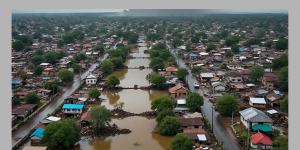
Why Real Estate in Kampala Floods: The Hidden Infrastructure Risks Investors Ignore
Every rainy season in Uganda exposes the same uncomfortable truth — Kampala’s real estate market is built on fragile infrastructure. Investors lose billions annually not because the land is bad, but because the systems around it have collapsed.
This analysis unpacks why infrastructure failure is now one of the biggest hidden threats to property value in urban Uganda, and what serious investors must do to protect their capital.
NOVERA Insight: Flood risk is no longer an accident — it is a predictable, mappable pattern tied to poor planning and wetland destruction.
1. How We Got Here: The Urban Planning Crisis
Kampala’s infrastructure was never designed to support the current population density. Decades of unregulated construction have suffocated natural drainage channels.
| Risk Factor | Description | Impact on Property |
|---|---|---|
| Wetland Encroachment | Developers build on natural water absorption zones. | Chronic flooding; foundation damage. |
| Blocked Drainage | Nakivubo Channel & others filled with waste & structures. | Stormwater backups into homes. |
| Poor Urban Planning | No zoning discipline; mixed-use chaos. | Rapid property depreciation. |
2. The Financial Impact: What Investors Actually Lose
Flooding destroys more than walls — it destroys value.
- Insurance premiums spike or become unavailable
- Rental income collapses because tenants avoid high-risk zones
- Resale value drops 30–60%
- Mortgage approvals fail due to bank risk assessments
NOVERA Verdict: Flood-prone real estate is not just risky — it is economically irrational unless purchased at deep-discount distress pricing.
3. Red Zones: Where Flood Risk Is Highest
Based on drainage mapping and public hazard records, these areas show the highest probability of seasonal flooding:
- Bwaise
- Kireka
- Nateete
- Makerere-Kivulu
- Portions of Bugolobi
- Kansanga low-lying belts
Investors often buy here because prices seem “affordable” — without realizing they’re inheriting lifetime structural problems.
4. Novera’s Infrastructure Due-Diligence Checklist
Before buying any urban land or house, Novera recommends these mandatory checks:
| Check | Why It Matters |
|---|---|
| Stormwater Flow Study | Identifies natural water pathways. |
| Drainage Proximity Audit | Ensures access to functioning channels. |
| Soil Saturation Test | Confirms foundation suitability. |
| Historical Flood Records | Predicts future risk with high accuracy. |
5. Conclusion: Infrastructure Is Not “Extra” — It Is the Investment
Ugandan investors must stop buying land based on location alone. The true determinant of value is the infrastructure around the land — not the land itself.
A property with weak infrastructure is a liability.
A property with strong infrastructure is an appreciating asset.
Novera’s role in this ecosystem is to give you the clarity to tell the difference.

The Truth About Fake Land Titles in Uganda How Investors Lose Millions

The True Cost of Owning Property in Uganda (2025 Investor Breakdown)

Kampala’s Emerging Investment Corridors: The GROWTH AREAS 2025–2030 Forecast

Graphic showing wealth concentration, land ownership and title issues in Uganda.

Novera Research & Insights

Discover Novera’s Research & Insights. Quarterly real estate reports, trends, and diaspora investment analysis in Uganda. Authoritative, trusted, actionable